Victoria goes to the polls on Saturday 28 November 2026. Over the next few weeks your children will see signs on fences and hear adults talking about the election, so it’s a good moment to explain what voting is. They’ll have real examples all around them to point at.
You don’t need to know everything about Parliament to do this well. Most kids want to know what’s going on and why it matters to them. The ideas below start simple and build up. The election facts come from the Victorian Electoral Commission (VEC).
Start with something they already know
Most children have voted already, even if they didn’t call it that. Maybe their class picked a name for the fish, or the family chose between pizza and pasta. Start there. Ask how the choice was made and whether it felt fair.
Then explain that an election works the same way, just much bigger. Grown-ups in Victoria choose the people who make decisions for the whole state, such as how schools, hospitals, public transport and police are run. Everyone gets one vote, and every vote counts the same.
What Victorians are voting for
On 28 November, Victorians choose the members of State Parliament. Parliament has two parts, called houses.
- The Legislative Assembly, or lower house, has 88 members. Victoria is divided into 88 areas called districts, and each district elects one member. The party or group with the support of most members in this house forms the government.
- The Legislative Council, or upper house, has 40 members. They come from 8 larger regions, with 5 members for each region.
For younger children, “we’re choosing who speaks for our area in Parliament” is plenty. Older children might like to find out the name of your district and who represents it now.
The three levels of government, in one minute
Kids often mix up councils, State Parliament and Federal Parliament. The Parliamentary Education Office sorts them like this:
- Local councils look after things close to home, like rubbish and recycling, parks and parking.
- State governments look after things for everyone in the state, like schools, hospitals, public transport and police.
- The federal government looks after things for all Australians, like defence, migration, the post and our money.
This election is about the middle one.
How voting works in Victoria
Australian citizens aged 18 and over who have lived in Victoria for more than a month must enrol and vote. Children are often surprised that voting is the law, so it’s worth saying out loud.
Voting is also secret. Each person fills in their ballot papers alone, behind a voting screen, and nobody else gets to see what they wrote.
Victoria uses preferential voting, which means you number the boxes in order of preference. On the lower house ballot paper you write 1 next to your first choice, 2 next to your second, and keep going until every box has a number. On the upper house ballot paper you number at least 5 boxes, either above the thick line or below it, but not both.
Not everyone votes on Saturday. Early voting runs from Wednesday 18 November to Friday 27 November (closed Sunday 22 November), and postal votes are available too. On election day, voting centres are open from 8 am to 6 pm.
The secret ballot has a Ballarat story
A secret ballot means nobody can see how you voted, so nobody can pressure you about it. Victoria’s secret ballot law took effect in March 1856, making it one of the first places in the world to vote this way. Britain adopted the idea in 1872 and the United States after 1884, and it became known overseas as the “Australian ballot”.
The National Museum of Australia notes that the Eureka rebellion near Ballarat helped lead to the 1855 election of eight goldfields members, all of whom supported the secret ballot. If you live nearby, the Eureka Centre in Ballarat is a good place to talk about it with older kids.
Not everyone could always vote
This part often leads to good conversations about fairness. The law giving women the vote in Victorian state elections passed in 1908, and non-Indigenous women first voted at a state election in 1911. The right of Aboriginal and Torres Strait Islander people to vote in federal elections was confirmed in 1962, and in 1984 enrolment became compulsory for them, as it was for other Australians.
You could ask your child why they think these changes took so long, and what they would have done.
Questions kids ask, with simple answers
“Who are you voting for?” You can tell them, or you can explain that the secret ballot means nobody has to say. Both are fine. You can still talk about what matters to your family, like looking after each other and the place you live, without naming anyone.
“Why do grown-ups have to vote?” It’s the law in Australia for citizens aged 18 and over. It means the government is chosen by nearly everyone, not only the people who felt like voting that day.
“What if the person you voted for doesn’t win?” Whoever wins represents everyone in the district, including people who voted for someone else. You can still write to them about things you care about, and there’s another state election in four years.
“Can kids vote?” Not until 18, though Victorians can fill in an enrolment form at 17 so they’re ready. Children can have a say in other ways: writing to their member of Parliament, speaking to their local council, or starting a petition at school.
Free resources to use together
- Learn to vote from the VEC, including Easy English guides on how voting works.
- Passport to Democracy, the VEC’s free program for teachers and students in Years 3 to 10.
- Why do you need to vote?, a short plain-English answer from the Parliamentary Education Office.
Books that take it further
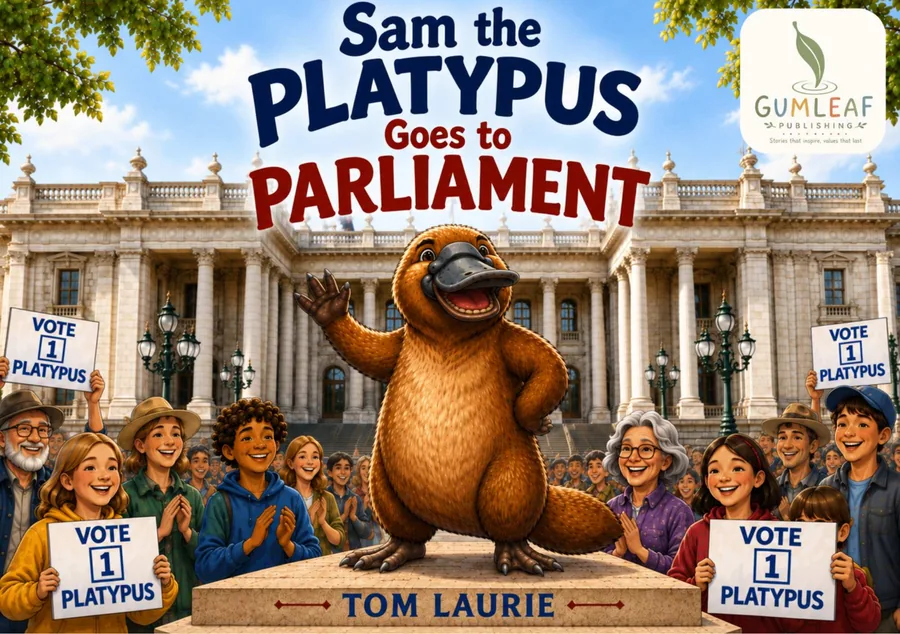
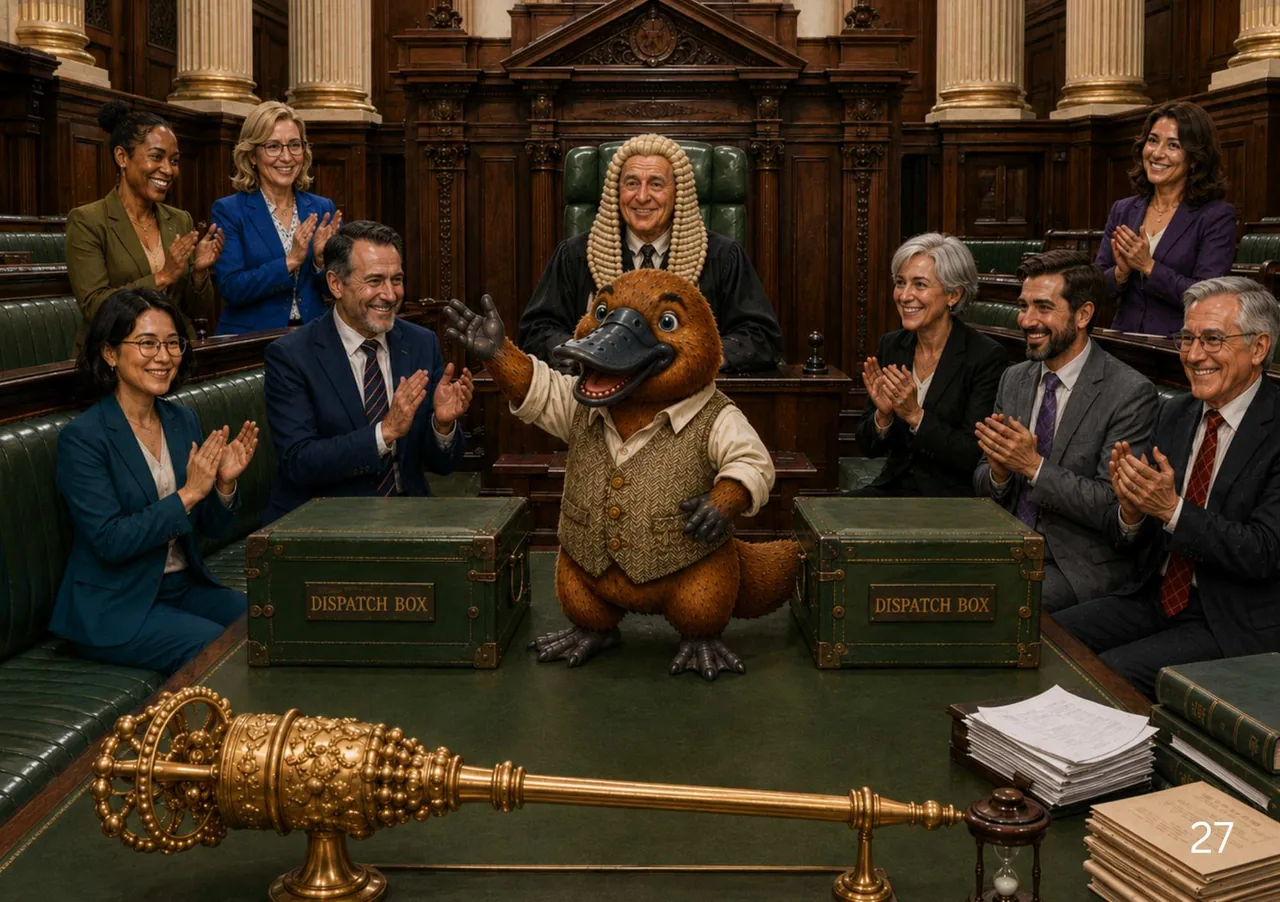
Our picture e-books follow Australian animals through the same system children are hearing about in the news. Sam the Platypus Goes to Parliament is set in State Parliament and covers elections and voting, for ages 8 to 12. Wally and Tilly’s Canberra Adventure goes to Federal Parliament, and The Mob shows how a local council works, for ages 6 to 10. See all three in our Library, or read about using them in class on our For Schools page.
This article explains how voting works in Victoria. It does not support any party or candidate. Election details come from the Victorian Electoral Commission and were correct on 1 November 2026. For the latest information, visit vec.vic.gov.au.